On this page
Need a leak pinpointed?
Acoustic tools hear leaks you can't see. Call to reach a provider.
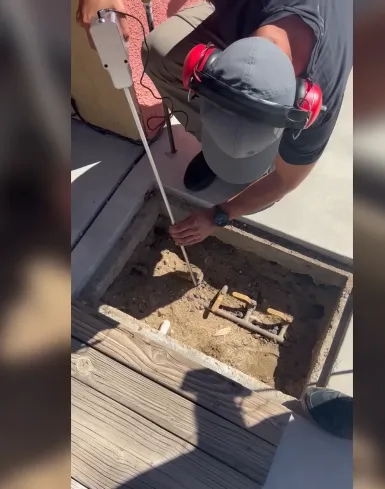
(813) 303-9621Free call connection · Open 24/7 · Plant City, Brandon, Valrico, Seffner & DoverAcoustic leak detection uses sensitive microphones, amplifiers and filters to hear the sound of water escaping a pressurized pipe through floors, walls and soil. The technician moves a ground microphone along the pipe route and compares readings; the signal peaks over the leak. Ultrasonic sensors and electronic correlation extend the method to faint leaks and long runs.
Why Leaks Make Noise
When water forces its way through a crack or pinhole under pressure, it creates turbulence and vibration: a hiss at the hole, a rushing sound in the surrounding soil, and vibration that travels along the pipe itself. The higher the pressure and the smaller the opening, the higher-pitched the sound. Metal pipe carries that sound a long way; plastic pipe muffles it quickly.
Acoustic equipment amplifies those sounds and filters out background noise like traffic, AC units and appliances, so a trained ear can hear the leak and follow it.
Acoustic Tools and How They're Used
| Tool | Use |
|---|---|
| Contact probe / listening rod | Pressed against valves, hose bibs and fixtures to compare sound levels and narrow the area |
| Ground microphone | Set on floors, slabs and soil along the pipe route to find the loudest point |
| Deck plate | Listens through pool decks and pavers |
| Soil probe | Pushed into soil or turf to listen closer to a buried line |
| Ultrasonic sensor | Picks up high-frequency sound from small, high-pressure leaks, including gas and air leaks |
| Correlator | Two sensors on the pipe; software calculates leak position from the time difference of the sound |
How an Acoustic Search Works
- Confirm the leak with a pressure test so the system is known to be leaking.
- Listen at contact points (valves and fixtures) and note where the sound is loudest.
- Trace the pipe route with a line locator so listening happens directly above it.
- Grid the area with the ground microphone every few inches, watching the meter and listening.
- Boost if needed: on plastic pipe or quiet leaks, air or tracer gas is introduced to make the leak louder or detectable.
- Mark the peak.
Pro tip: Acoustic work goes best when the house is quiet. Turn off TVs, washers, dishwashers and pool pumps before the technician starts listening.
Electronic Leak Correlation
On long runs, like a service line across a large lot, a commercial main or a line under a parking lot, correlation saves time. Sensors are attached to the pipe at two known points, often valves or hydrants. The leak's sound reaches the nearer sensor first. Knowing the distance between sensors and how fast sound travels in that pipe material, software calculates where along the line the leak sits. The technician then confirms with a ground microphone. It's especially useful for underground water lines.
What Affects Accuracy?
- Pipe material: copper and steel carry sound well; PVC, PEX and CPVC need more help
- Depth and surface: deep lines and thick slabs, carpet or pavers muffle sound
- Background noise: traffic, equipment and wind make listening harder
- Leak size: very small or very large leaks can sound different from what's expected
- Soil: saturated sandy soil after summer rain can dampen sound
Acoustic results are usually cross-checked with thermal imaging or tracer gas when conditions are tough.
Where Acoustic Detection Is Used
It's the backbone of slab leak detection, service line and pool line work, and many commercial searches. Call (813) 303-9621 for a free quote for leak detection in Plant City.
Warning: Acoustic detection finds pressurized leaks. Drain leaks don't make the same sound and need camera or hydrostatic testing instead.
Acoustic & Ultrasonic Leak Detection FAQs
How does acoustic leak detection work?
Sensitive microphones pick up the hiss and vibration of water escaping a pressurized pipe. The technician follows the sound to its loudest point, which marks the leak.
How accurate is acoustic leak detection?
In good conditions, often within inches to a foot. Accuracy depends on pipe material, depth, surface and background noise.
Does acoustic detection work on PVC or PEX?
Plastic pipe carries sound poorly, so air or tracer gas is often added to make the leak detectable.
What is leak correlation?
Two sensors on the pipe record the leak sound; software uses the time difference to calculate the leak's position along the line.
How do I get a quote for acoustic leak detection?
Call (813) 303-9621 and describe the leak. A local provider can give you a free quote.