On this page
Pool losing water?
Call now to be connected with a local pool and spa leak detection specialist.
(813) 303-9621Free call connection · Open 24/7 · Plant City, Brandon, Valrico, Seffner & DoverPool leak detection finds where a swimming pool or spa is losing water: through the shell, a fitting, or the underground plumbing. A specialist confirms the loss, inspects the structure with dye and an underwater hydrophone, then pressure tests each line one by one. When a line fails, the break is located from the deck so the repair only opens a small area.
Is My Pool Leaking or Just Evaporating?
Every Florida pool loses water. Sun, heat, wind and low-humidity spring days pull water off the surface, and swimmers, splash-out and backwashing take more. In hot, windy weather, losing around a quarter inch a day can be normal. What isn't normal is a pool that drops noticeably faster than that, keeps dropping overnight, or forces the autofill to run constantly.
The simplest way to tell the difference is the bucket test. Fill a bucket with pool water and set it on the first or second step so the water inside the bucket is level with the pool. Mark both levels, turn off the autofill, and wait 24 hours. Evaporation affects the bucket and the pool about equally. If the pool dropped noticeably more than the bucket, the extra water is leaking out.
Run the test twice: once with the pump running on its normal schedule and once with it off. If the pool loses more with the pump on, the leak is probably on the pressure side (return lines). If it loses more with the pump off, look at the suction side, the shell or the fittings.
How Do Specialists Find a Pool Leak?
A thorough pool leak detection covers the structure, the plumbing and the equipment, in that order.
- Equipment check. The technician notes every pump, filter, heater, valve and line at the pad, and checks unions, valves and pump seals for drips. This tells them how many lines run to the pool.
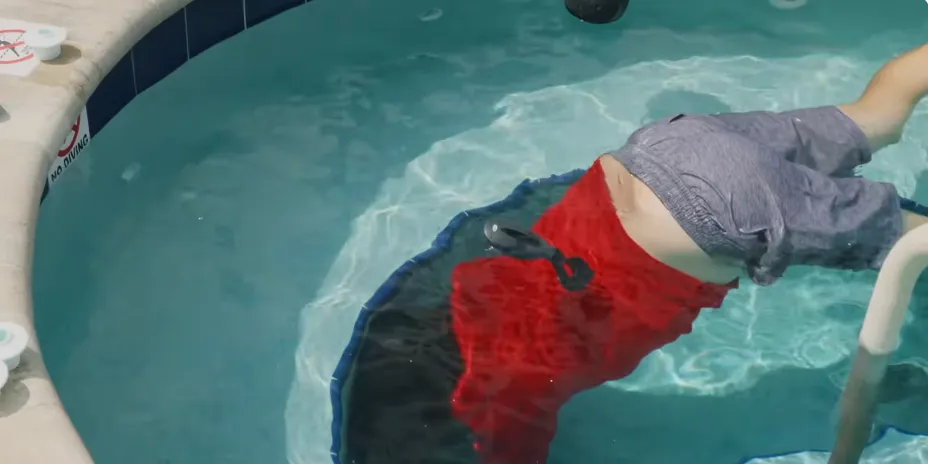
- Structural inspection. With the water calm, dye is released next to skimmer throats, lights, returns, main drains, steps, cracks and tile lines. Dye that gets pulled into an opening shows a leak. Many specialists go into the water to do this.
- Underwater listening. A hydrophone picks up the sound of water being drawn out through a crack or fitting.
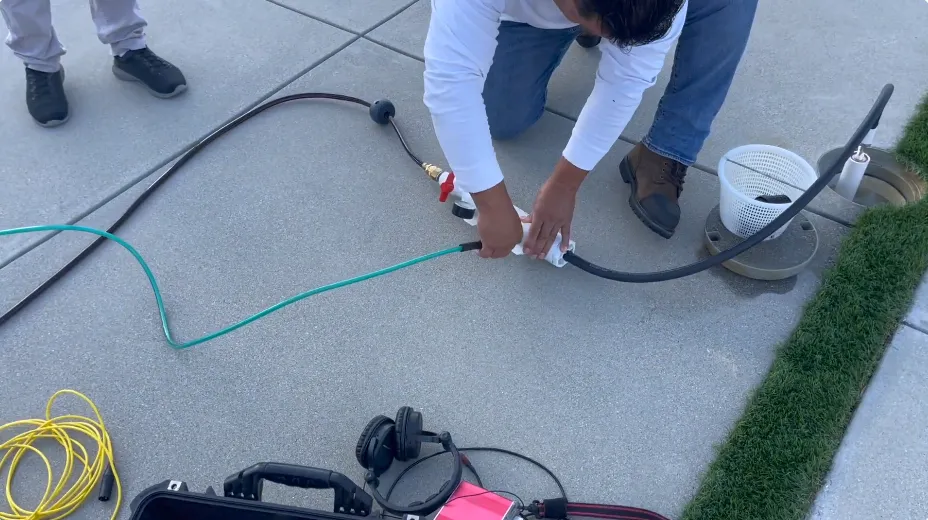
- Line-by-line pressure testing. Each skimmer, drain, return and cleaner line is plugged at the pool and the equipment, filled and pressurized. A falling gauge proves which line leaks. Lines that share a tee are separated with plugs so each is tested alone.
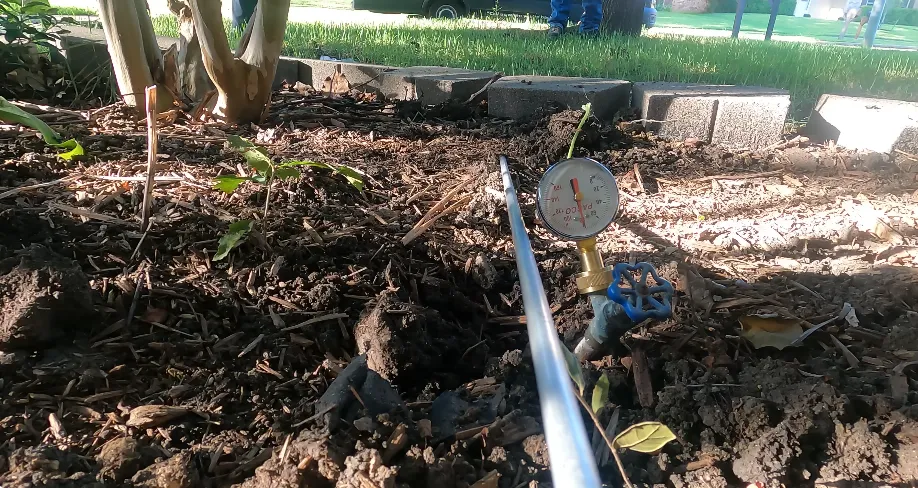
- Locating the break. Air and water are pushed through the failed line while the technician listens through the deck with a deck plate or soil probe. The break makes a distinctive boiling sound.
Learn how pressure testing works in detail on our pool plumbing pressure testing page. The same pinpoint-first approach drives all professional leak detection in Plant City.
What Are the Signs of a Pool or Spa Leak?
- The pool drops more than the bucket in a 24-hour bucket test.
- The autofill runs often or your water bill climbs during swim season.
- Wet or soggy ground around the pool, deck or equipment pad when it hasn't rained.
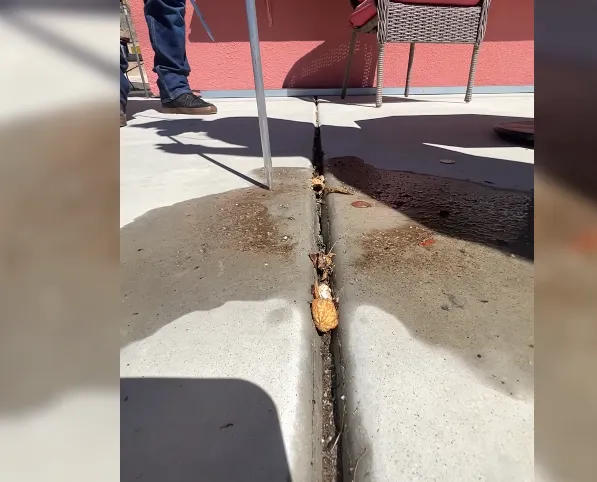
- Cracks or settling in the deck, coping or tile line.
- Loose or missing tiles, or a vinyl liner that wrinkles or pulls away.
- Air bubbles in the return jets, which can mean a suction-side leak drawing in air.
- Algae that keeps coming back because fresh water keeps diluting the chemicals.
- Water standing at the equipment pad or around valves and the filter.
Where Do Pools Leak Most Often?
Skimmers. The joint where the plastic skimmer meets the concrete shell is one of the most common leak points. Ground movement and temperature changes open a gap over time.
Lights. Light niches and the conduit behind them can leak, especially in older pools.
Returns and main drains. Fittings set into the shell can crack or lose their seal.
Underground plumbing. Return and suction lines buried under the deck can crack from settling soil, tree roots or a freeze. Pools around Walden Lake and other established neighborhoods often have plumbing that has been in the ground for decades.
The shell itself. Structural cracks, tile-line separation and spillways between a raised spa and the pool can leak steadily.
Equipment. Pump shaft seals, unions, valves, heater connections and filter lids leak at the pad. They are easy to see once you know to look.
In Plant City's sandy soil, settling after heavy summer rain puts extra strain on buried pool plumbing and the skimmer joints.
What Can You Check Before Calling?
- Do the bucket test with the pump on and off, as described above.
- Turn off the autofill so it doesn't hide the loss.
- Walk the equipment pad with the pump running and look for drips at unions, valves, the pump and the filter.
- Check the water line. If the pool stops dropping at the bottom of the skimmer opening, the leak may be in the skimmer. If it stops at a light, suspect the light niche.
- Look at the deck for new cracks, soggy grass or sunken areas.
Pro tip: Keep the water at a normal level before the specialist arrives. Pressure testing and dye testing need the skimmers and returns underwater, so don't let the pool drop too far.
What Happens During a Pool Leak Detection Visit?
- Arrival and history. The specialist asks how much water you're losing, how long it's been happening, and what your bucket test showed.
- Equipment review. Photos and notes of the pad and valve positions so everything is returned exactly as found.
- Structure test. Dye and a hydrophone check every fitting and surface.
- Plumbing test. Each line is plugged and pressure tested.
- Pinpoint and mark. Failed lines are traced and the break is marked on the deck.
- Report. You get a list of every leak found, often with photos, so your pool company or a repair specialist knows exactly what to fix. Some fixes, like sealing a small fitting, can sometimes be done on the spot.
A pool with several pumps, a spa, water features or a large equipment pit simply has more lines to test.
What Shapes a Pool Leak Search?
| Factor | Why it matters |
|---|---|
| Number of lines | Pools with a spa, cleaner line, water features or several returns have more lines to plug and test. |
| Spa or spillway | Raised spas keep constant pressure on their plumbing and spillways need separate testing. |
| Equipment access | Pads in tight pits or with rusted valves take longer to isolate. |
| Deck surface | Pavers, concrete and turf transmit sound differently when locating a break. |
| Pool type | Gunite/plaster, fiberglass and vinyl liner pools each fail in different ways. |
For a free quote, call (813) 303-9621 and share your bucket test result.
When Is a Pool Leak Urgent?
Most pool leaks aren't emergencies, but some are. If the pool drops several inches in a day, water is undermining the deck, or an equipment line has burst, shut off the pump and call. A large leak can wash out the sand under the deck and the shell, and an empty pool in Florida's high water table can be at risk. For the spa side, see spa and hot tub leak detection.
Warning: Never drain an in-ground pool to "find" a leak. Groundwater pressure can push an empty shell up out of the ground. Leave testing to a specialist.
Pool & Spa Leak Detection FAQs
How much water loss means my pool is leaking?
In hot, windy Florida weather, around a quarter inch a day of evaporation can be normal. If your pool loses noticeably more, or the bucket test shows the pool dropping faster than the bucket, a leak is likely.
Can a pool leak be found without breaking the deck?
Yes. Lines are pressure tested to prove which one leaks, then the break is located from the surface by listening through the deck. Only the small section over the break needs to be opened.
Will my autofill hide a leak?
Yes. An autofill keeps the level steady and can mask a leak for months. Turn it off during the bucket test and watch your water bill during swim season.
Should my weekly pool service find the leak?
Pool techs keep water clean and equipment running. Finding a cracked skimmer joint or a broken line under the deck needs dye testing, hydrophones and pressure rigs, which a leak detection specialist brings.
Do you check spas and water features too?
Yes. Spas, spillways, fountains and water features are tested along with the pool, since they often share plumbing and equipment.
How do I get a quote for pool leak detection?
Call (813) 303-9621. You'll be connected with an independent local pool leak specialist who can give you a free quote based on your pool and equipment.