On this page
- What Counts as a Hidden Leak?
- How Are Leaks Inside Walls and Ceilings Found?
- What Are the Signs of a Leak Inside a Wall or Ceiling?
- What Causes Hidden Leaks in Plant City Homes?
- What Can You Check Before Calling?
- What Happens During a Hidden Leak Visit?
- What Shapes a Hidden Leak Search?
- When Is a Hidden Leak an Emergency?
- FAQs
Stain, smell or soft drywall?
Call now to be connected with a provider who finds hidden leaks in walls and ceilings.
(813) 303-9621Free call connection · Open 24/7 · Plant City, Brandon, Valrico, Seffner & DoverHidden water leak detection finds leaks you can't see: inside walls, above ceilings, under cabinets and beneath floors. A provider scans with infrared thermal cameras and moisture meters to map where materials are wet, then tests the nearby supply lines, drains, shower valves and appliance lines to identify the exact source, so only a small, targeted opening is needed.
What Counts as a Hidden Leak?
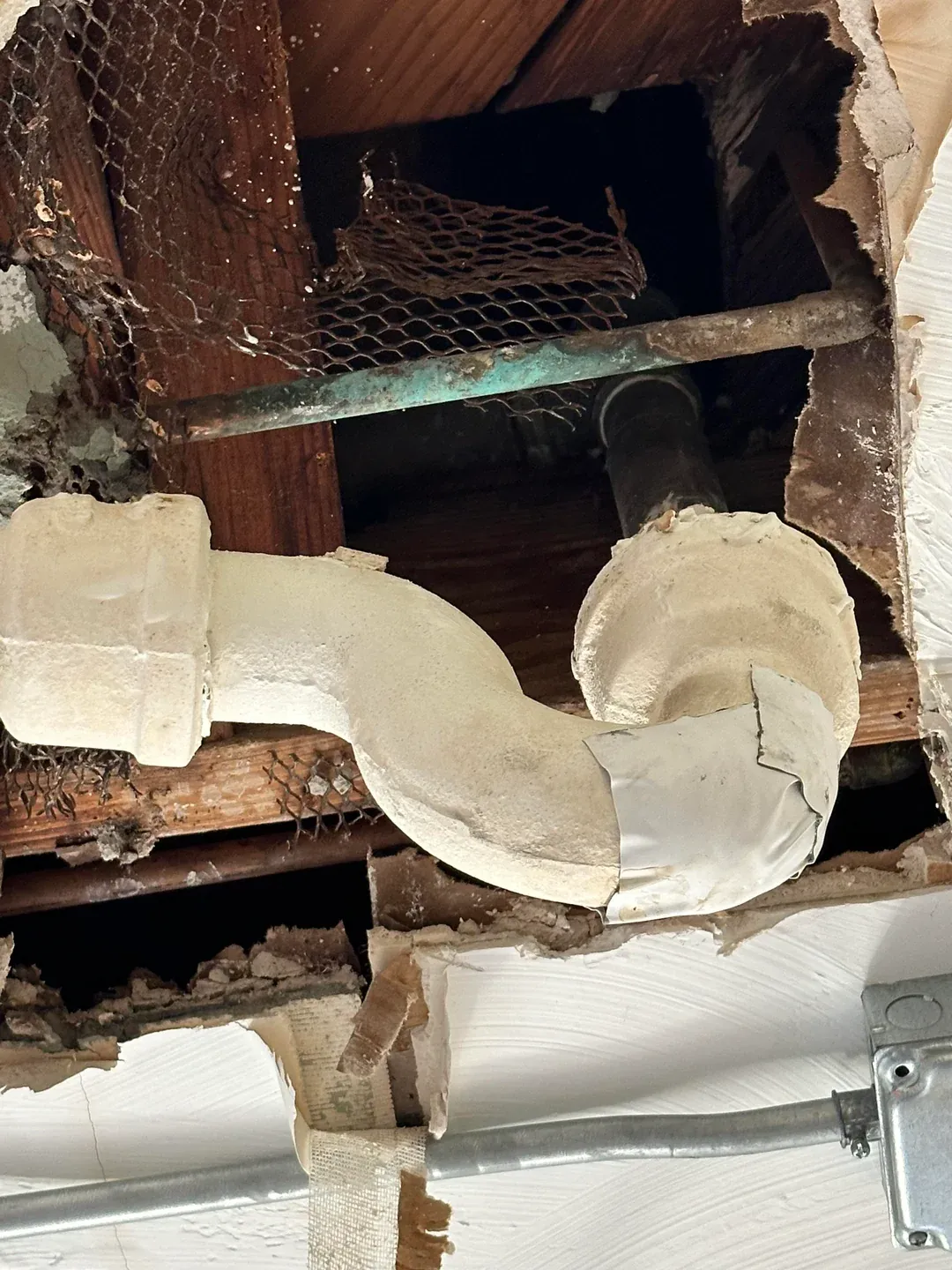
A hidden leak is any leak whose source you can't see from the room you're standing in. Water from a pinhole in a copper line inside a wall, a cracked drain fitting above a ceiling, a failed shower pan, or a slow drip at an ice-maker line behind the refrigerator can all travel along studs, joists, pipes and drywall paper before they show. The stain you see is where the water ended up, which is often several feet from where it started.
That's why opening the wall right behind the stain so often misses. A methodical search maps how far the moisture spreads, finds the wettest point, and then checks which pipes and fixtures run through that area.
Hidden leaks show up in every kind of Plant City home: two-story houses in newer communities where an upstairs bathroom sits over a living room, older block homes with original copper in the walls, and condos or townhomes where water comes from the unit above. For that last situation, see condo and unit-above leak detection.
How Are Leaks Inside Walls and Ceilings Found?
- Visual survey. Stains, paint bubbles, swollen baseboards, soft drywall and mold spots are noted and photographed.
- Infrared thermal imaging. A thermal camera shows temperature differences behind surfaces. Evaporating water usually reads cooler than dry drywall; a hot-water leak reads warmer. The pattern shows the shape and spread of the wet area.
- Moisture meters. Pin and pinless meters measure moisture in drywall, wood and flooring. Readings taken in a grid build a moisture map that points toward the source.
- Plumbing tests. Supply lines are pressure tested; fixtures are run one at a time to see which one makes the wet area grow; drains are flood-tested. An acoustic probe on nearby valves can hear a pressurized pinhole.
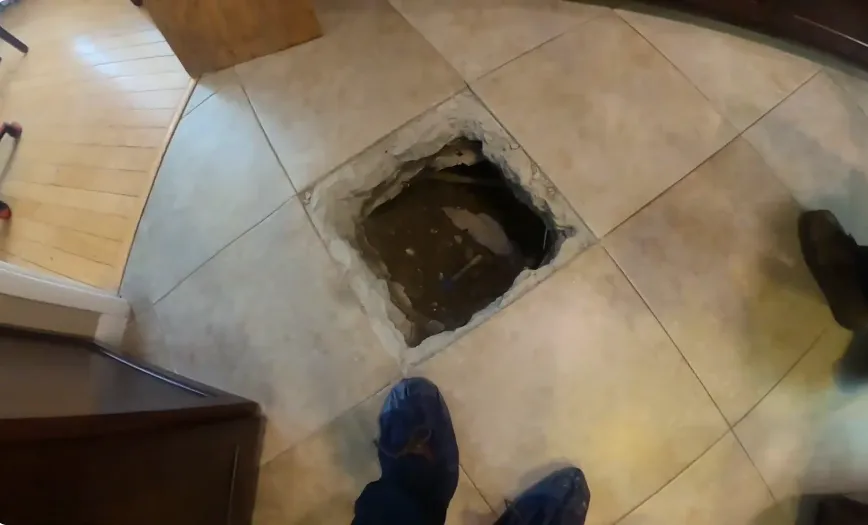
- Small inspection openings. When needed, a tiny hole for a borescope camera confirms the source before any large opening is made.
Learn more about the camera side on our infrared thermal imaging page.
What Are the Signs of a Leak Inside a Wall or Ceiling?
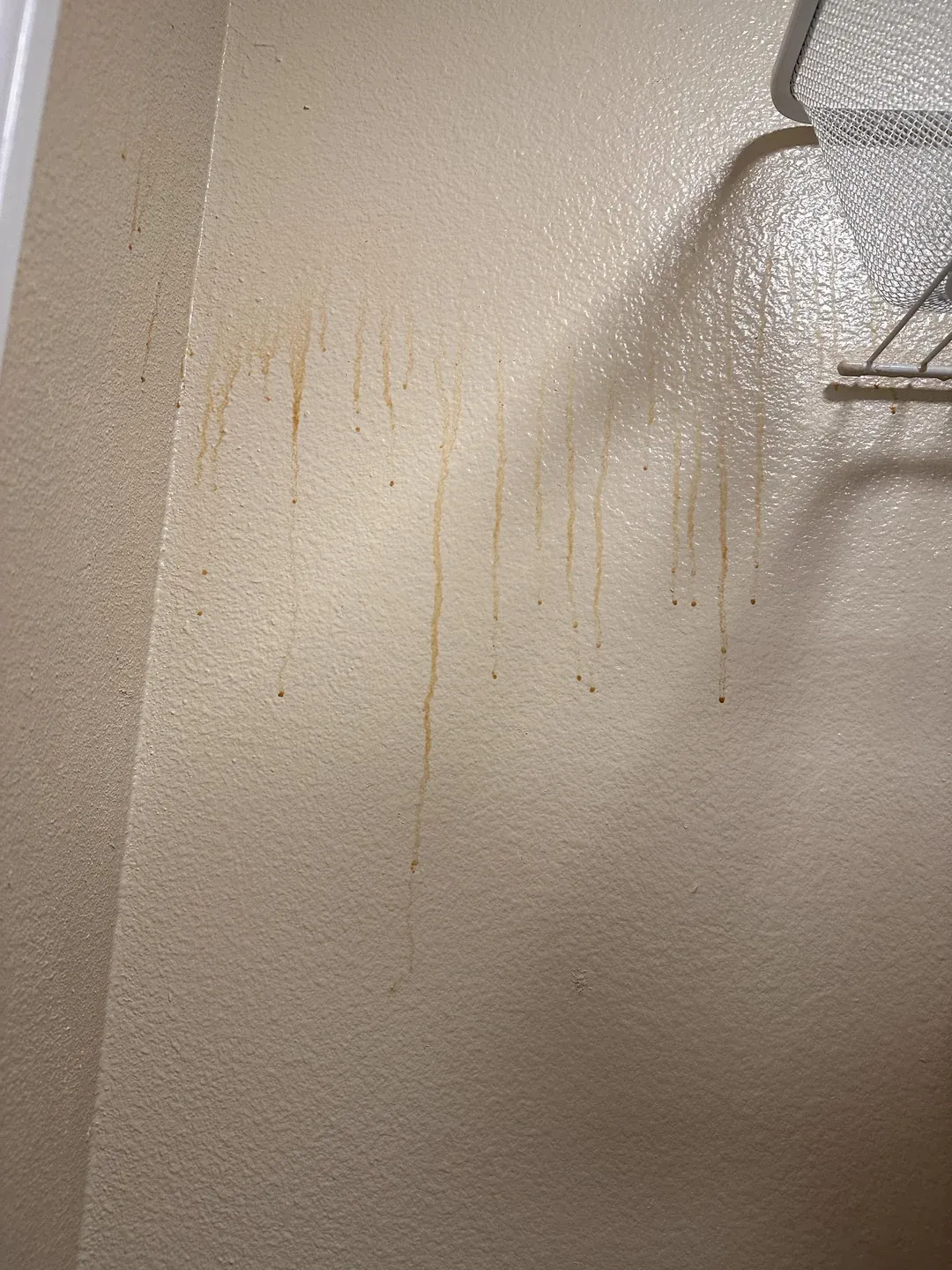
- Brown or yellow stains or rings on ceilings and walls.
- Paint that bubbles, blisters or peels, or wallpaper that lifts.
- Soft, sagging or crumbling drywall, especially on ceilings.
- Baseboards that swell, separate or stain along the bottom of a wall.
- A musty, earthy smell in one room or closet.
- Mold spots on walls, inside closets or under sinks.
- Dripping or trickling sounds inside a wall when no one is using water.
- Warped or cupping floors next to a bathroom or kitchen wall.
What Causes Hidden Leaks in Plant City Homes?
Pinholes in copper. Copper supply lines can corrode from the inside and develop tiny holes that spray a fine mist into the wall cavity. More on that in burst and pinhole pipe leaks.
Shower pans and valves. A failed shower pan or a leaking mixing valve wets the wall and subfloor only when the shower runs.
Drain fittings. Upstairs tub, toilet and sink drains run through ceiling spaces; a cracked fitting or loose slip joint drips every time water goes down.
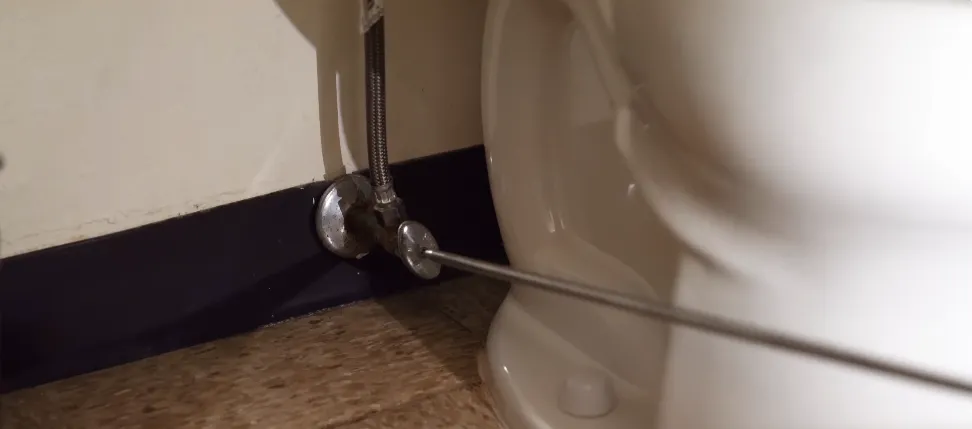
Appliance lines. Ice-maker, dishwasher and washing machine supply lines are frequent, slow leakers hidden behind appliances.
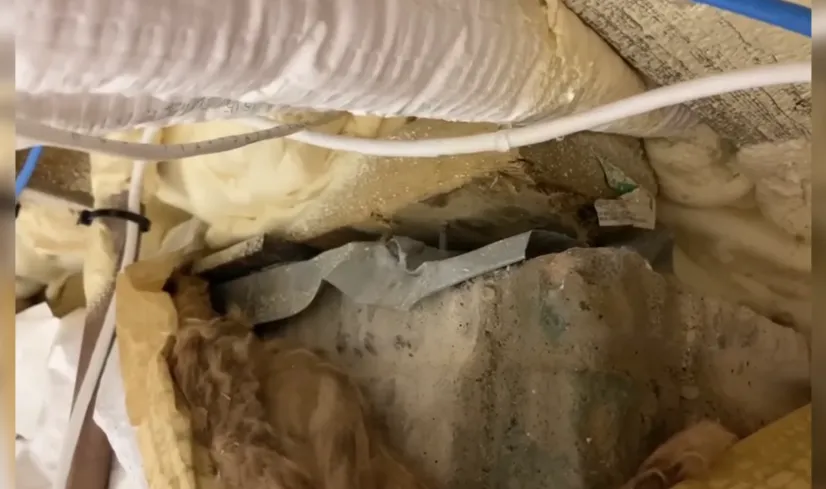
AC condensate. In Florida's humid climate, air handlers produce a lot of condensate. A clogged drain line or overflowing pan in the attic can stain the ceiling below. That isn't a plumbing supply leak, but it looks like one.
Storm water. Wind-driven rain during summer storms and hurricane season can get through roofs, flashing, windows and stucco. A provider can help confirm whether you're dealing with plumbing or weather intrusion, so you call the right trade.
What Can You Check Before Calling?
- Watch the stain. Draw a light pencil line around its edge and check it after using nearby fixtures, and again after rain.
- Run fixtures one at a time. If the stain grows only when the upstairs shower runs, the shower pan, valve or drain is the likely source.
- Do a meter test. With all water off, a moving meter means a pressurized supply line is leaking.
- Check the attic around the air handler for a full drain pan or a dripping condensate line.
- Look behind appliances at ice-maker and washer hoses.
Pro tip: If water is actively dripping through a ceiling, poke a small hole at the lowest point of a bulging area and catch the water in a bucket. That relieves the weight and helps keep the whole ceiling panel from coming down.
What Happens During a Hidden Leak Visit?
- Walkthrough of every affected room, plus the rooms above and beside it.
- Thermal and moisture scan to map the wet area and find its center.
- Source testing of supply lines, drains, valves, the shower and appliance lines in that zone.
- Confirmation with a small inspection hole or borescope, if needed.
- Findings with photos and readings. These help your plumber, a drying or restoration company, and any insurance claim. See leak documentation for insurance.
What Shapes a Hidden Leak Search?
| Factor | Why it matters |
|---|---|
| Source type | Pressurized supply leaks run constantly; drain and shower leaks only when used. Each needs different tests. |
| Wall and ceiling finish | Tile, paneling and textured ceilings affect thermal and moisture readings. |
| Floors above | Two-story homes and condos add a second floor of fixtures to check. |
| Age of the stain | Old, dried stains are harder to trace than active ones. |
| Weather | Stains that appear after rain may need roof or window inspection rather than plumbing tests. |
Call (813) 303-9621 for a free quote from a local leak detection company serving your ZIP code.
When Is a Hidden Leak an Emergency?
If a ceiling is sagging or dripping, water is near light fixtures or outlets, or the stain grows by the hour, shut off the main water valve and turn off power to that area at the breaker. Then call for emergency leak detection.
Warning: Wet drywall and insulation in Florida humidity can start growing mold within 24 to 48 hours. Stop the water and start drying as soon as possible, even before the source is fully found.
Hidden & In-Wall Leak Detection FAQs
How do you find a leak behind a wall without tearing it open?
Infrared cameras show temperature patterns from wet materials, moisture meters measure dampness through the surface, and plumbing tests identify which line or fixture is responsible. Together they narrow the source so only a small, targeted opening is needed.
Does thermal imaging work through tile and drywall?
Thermal cameras read surface temperature, so they reveal wet areas behind drywall and often behind tile when there's a temperature difference. Readings are confirmed with moisture meters and plumbing tests.
Is my ceiling stain from the roof or plumbing?
A stain that appears or grows after rain points to the roof, flashing or windows. One that appears regardless of weather, especially below a bathroom or kitchen, points to plumbing or an AC condensate line.
Can a hidden leak cause mold?
Yes. Wet drywall, wood and insulation can grow mold within a day or two in Florida's humidity. Musty smells are often the first sign.
How can I tell a plumbing leak from condensation?
Condensation forms on cold pipes, ducts and AC lines on humid days and dries when the air does. A plumbing leak keeps going and usually grows, and a supply-line leak moves the water meter with everything off.
How do I get a quote for hidden leak detection?
Call (813) 303-9621. You'll be connected with an independent local provider who can give you a free quote based on what you're seeing.