On this page
Crack in your pool?
Call now to be connected with a local pool leak specialist.
(813) 303-9621Free call connection · Open 24/7 · Plant City, Brandon, Valrico, Seffner & DoverPool shell crack leak detection determines whether cracks in a concrete (gunite or shotcrete) pool's plaster, structure, tile line, steps, benches or spillway are leaking. Specialists release dye at each crack with the water still, listen with an underwater hydrophone, and compare results against the plumbing tests, so cosmetic surface cracks are separated from structural leaks.
Cosmetic Crack or Structural Leak?
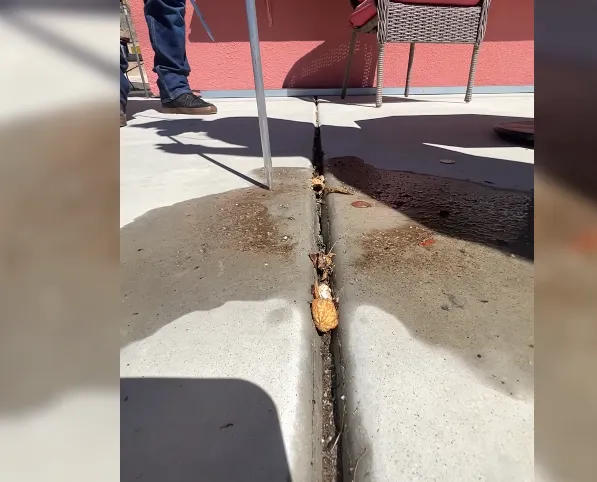
Pool plaster develops fine surface cracks, often called crazing or check cracks, as it cures and ages. They look alarming but usually stay in the plaster finish and don't leak. Structural cracks go through the shell itself. They tend to be longer, sometimes wider, often run in a line across the floor or up a wall, and may have uneven edges. Those can leak.
The difference matters. Resurfacing a pool to fix a cosmetic crack won't stop a leak elsewhere, and patching a structural crack without addressing why it formed may not last. Dye testing settles it: if dye gets pulled into the crack with the pump off, water is moving through it.
Where Do Shells Leak?
- Floor and wall cracks through the shell
- The tile line, where tile, grout and the bond beam separate from the shell
- Steps and benches, where separate pours meet the shell
- Spillways between a raised spa and the pool
- Around fittings: returns, drains, skimmers and lights (see skimmer leaks)
- Vinyl liners: tears, punctures and seams in liner pools
- Fiberglass pools: blisters, spider cracks and fitting seals
How Are Shell Leaks Tested?
- Water still. The pump is turned off so the water is calm.
- Dye at every crack. A small amount of dye is released right at the crack. If it's pulled in, that crack leaks.
- Hydrophone. An underwater microphone listens for the sound of water being drawn out.
- Tile line check along the full perimeter, especially where the deck has settled.
- Plumbing tests to rule out the lines, since a leaking line can be the real loss even with visible cracks.
This all happens within a full pool leak detection visit, often with the specialist in the water.
Why Do Pool Shells Crack in Plant City?
Soil movement. Sandy soil under the pool and deck shifts with heavy summer rain and dry winters. Uneven support stresses the shell.
Groundwater pressure. Florida's high water table pushes up on pools, especially if a pool is drained, which can crack or even lift a shell.
Deck settling. When the deck sinks, it pulls on the bond beam and tile line, opening gaps.
Age and construction. Older pools, and pools with thin shells or poor compaction, crack more easily.
Karst ground. Parts of eastern Hillsborough County sit on limestone with known sinkhole activity, including the area around Seffner. Unusual or rapidly growing cracks should be taken seriously.
What You Can Do First
- Photograph each crack and measure its length so you can see if it grows.
- Do the bucket test to confirm you're actually losing water.
- Turn the pump off, wait for still water, and drop a little food coloring near the crack. If it gets pulled in, note it.
- Check the tile line and coping for separation, especially where the deck has dropped.
Pro tip: Put a pencil mark at each end of a structural-looking crack. If it extends past the marks over a few weeks, mention that to the specialist.
Repair and Next Steps
Leaking cracks may be repaired with injected sealants, structural staples or patching, depending on the crack and the pool. Tile line separation is usually regrouted or reset. Recurring or growing cracks may need an engineer or pool contractor to assess the structure. Call (813) 303-9621 for a free quote, or start from our leak detection in Plant City, Florida homepage.
Warning: Never drain an in-ground pool to inspect a crack. Groundwater can push the empty shell up, causing far more damage.
Pool Shell Crack & Tile Line Leaks FAQs
Do all pool cracks leak?
No. Fine surface cracks in the plaster are usually cosmetic. Structural cracks through the shell can leak. Dye testing tells you which.
How do I know if a crack is leaking?
With the pump off and the water still, release a little dye right at the crack. If it's drawn into the crack, water is leaking through.
Can a pool crack be repaired without draining?
Some can, using underwater sealants and patches. Larger structural repairs may need partial or full draining, which should only be done by a professional because of groundwater pressure.
Why is my tile line separating?
Usually because the deck or bond beam has moved, often from soil settling. Separation can let water behind the tile.
How do I get a quote for pool crack leak detection?
Call (813) 303-9621 and describe where the cracks are. A local specialist can give you a free quote.