A water heater drain pan sits under the tank to catch small leaks and route them to a drain. The temperature and pressure (T&P) relief valve opens if the tank gets too hot or pressurized, discharging water through a pipe to a safe spot. Water in the pan, a dripping relief valve or a wet discharge pipe are early warnings that something needs attention.
- Water in the pan is a warning, not a solution.
- The relief valve is a safety device: never cap or plug it.
- A dripping relief valve can mean high pressure, high temperature or a worn valve.
- Check both a few times a year.
What the Drain Pan Does
A drain pan is a shallow tray under the water heater, often required when the heater is in a location where a leak would damage the building, such as an attic, interior closet or upper floor. Ideally, the pan has a drain line that carries water outside or to a drain. In many Florida homes, water heaters sit in garages, closets or attics, so the pan is the first line of defense.
Checking the Pan
- Look for water, rust stains or mineral crust in the pan.
- Make sure the pan drain isn't blocked and actually drains somewhere.
- Check for cracks or corrosion in the pan.
- Consider a leak sensor in the pan; see smart water leak sensors.
If there's water in the pan, find out where it's coming from: the tank, a fitting, the relief valve or condensation. Our guide on water heater leaks from the top or bottom helps narrow it down.
What the Relief Valve Does
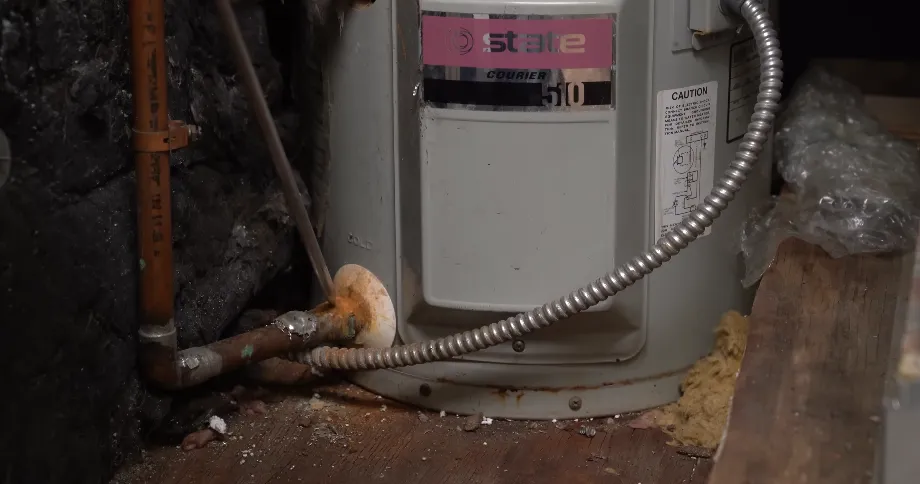
The T&P relief valve is mounted on the top or upper side of the tank. If the water temperature or pressure inside rises too high, the valve opens and releases water to bring it down, preventing a dangerous failure. A discharge pipe carries the water down toward the floor, into the pan, or outside.
Why a Relief Valve Drips
High pressure. If your home's water pressure is high, or if a check valve or pressure regulator makes the system "closed", heated water has nowhere to expand. That thermal expansion raises pressure and can make the valve open. An expansion tank is often the solution.
High temperature. A thermostat set too high, or a failing thermostat, can trigger the valve.
A worn valve. Mineral deposits, common with hard Plant City water, can keep the valve from sealing.
Never cap, plug or remove a relief valve or its discharge pipe. If it's discharging, have the cause checked by a professional.
Testing the Relief Valve
Many manufacturers recommend periodically lifting the valve's lever briefly to make sure it opens and reseats. Water released is hot, so keep clear of the discharge. If the valve doesn't open, or keeps dripping after testing, it may need replacement. Follow your heater's manual, and if you're not comfortable, ask a plumber.
When to Call
Call if the pan keeps collecting water and you can't find the source, if the relief valve discharges repeatedly, or if the area around the heater stays damp. A provider can check pressure, test connections and look for nearby hidden leaks. See water heater leak detection.
Frequently Asked Questions
Does every water heater need a drain pan?
Requirements depend on location and local code. Pans are commonly required where a leak could damage the building.
Why is there water in my water heater pan?
It could be a tank leak, a fitting, the relief valve discharging, or condensation. Find the source.
Is a dripping relief valve dangerous?
The valve is doing its safety job or is worn. Either way, have it checked rather than ignoring it.
What is thermal expansion?
Water expands when heated. In a closed system, that raises pressure and can cause the relief valve to open.
Can I replace a relief valve myself?
It involves draining pressure and working with hot water. Many homeowners have a plumber do it.