Grout and caulk problems let water get behind tiles and into walls or the curb, usually causing damage at specific spots like corners, the curb and around the valve. A shower pan leak lets water that has already soaked through the floor tile escape into the slab or subfloor, usually causing damage outside the shower floor, in the floor and adjoining rooms. Testing walls and floor separately tells you which.
- Wall spray and caulk joints point to grout or caulk; floor-level damage points to the pan.
- Testing the floor without spraying the walls isolates the pan.
- Caulk at changes of plane needs regular renewal.
- Fresh grout can't fix a failed pan.
How Grout and Caulk Leak
Cement grout is porous, and it cracks with movement. Caulk at corners, along the curb, at the tub edge and around the valve and shower arm shrinks and pulls away over time. Water sprayed onto the walls can get through these gaps, behind the tile, and down the wall cavity or into the curb. Signs include damage on the wall side of the shower, loose wall tiles, stains around the valve on the back side of the wall, and a wet curb.
How a Pan Leaks
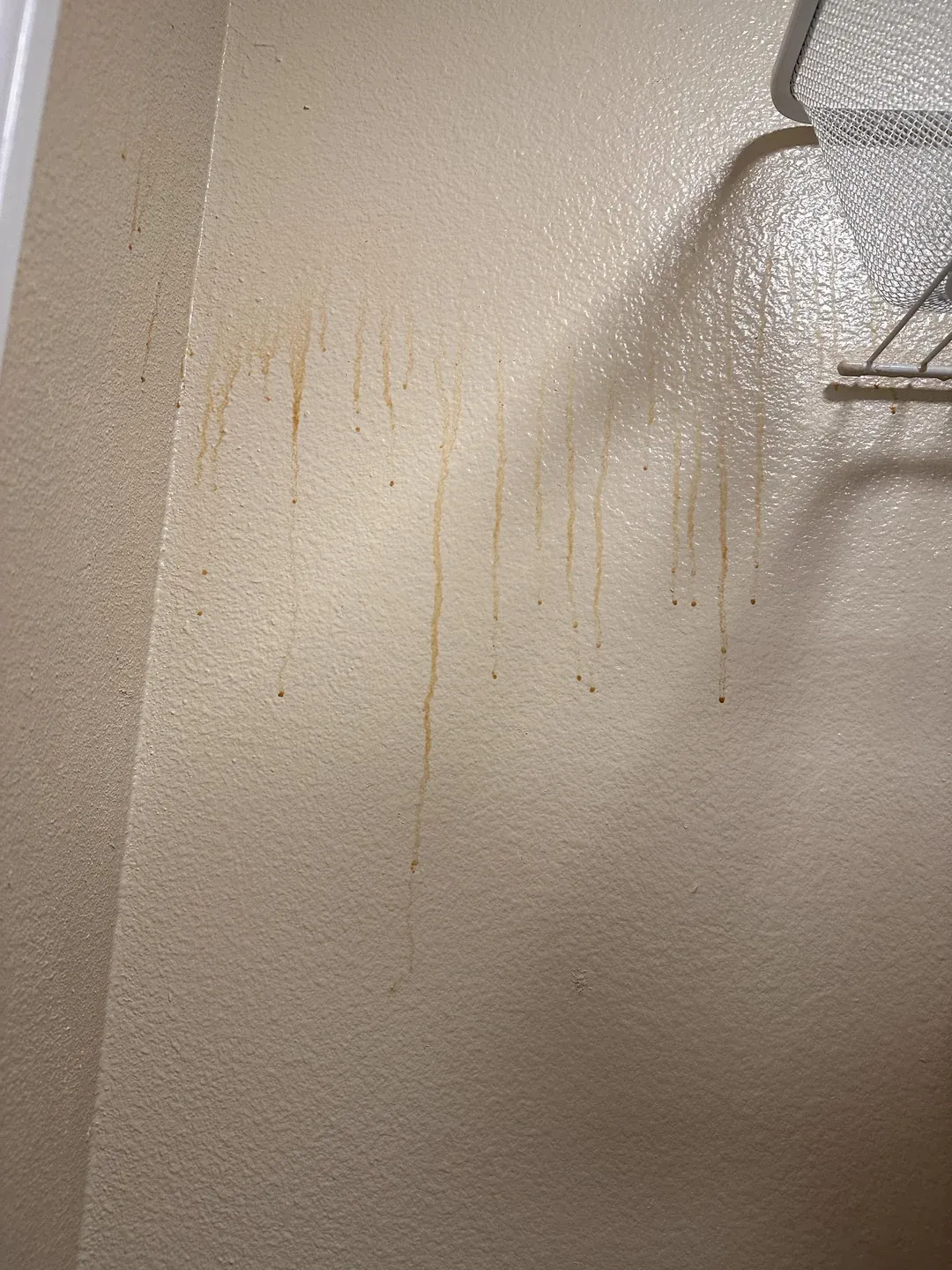
Water that soaks into the floor grout is supposed to reach the waterproof pan and drain away. If the pan is torn, cracked, poorly sloped or not sealed at the drain, that water escapes into the slab or subfloor. Signs show up outside the shower footprint: wet flooring, swollen baseboards, damp closets and, upstairs, ceiling stains below. For the full list, see shower pan leak signs.
Quick Comparison
- Damage on the wall behind the valve: likely valve, shower arm or wall grout
- Damage only after long showers with spray on the walls: likely wall grout or caulk
- Wet curb or floor just outside the curb: curb caulk, door seal or the pan at the curb
- Damage spreading across the bathroom floor or into adjoining rooms: likely the pan or the drain
- Damage whether the shower is used or not: a supply line leak; do a meter test
Separating Them With Testing
The cleanest way to tell is to test parts separately. Running water only on the floor with a handheld sprayer, without wetting the walls, tests the floor. Spraying the walls only tests the wall grout and caulk. Plugging the drain and flooding the floor tests the pan itself. Our step-by-step shower leak test walks through each one.
What Each Fix Involves
Grout and caulk issues are often solved by removing and replacing damaged grout and caulk, then sealing. Loose tiles may need resetting. A failed pan usually requires removing the shower floor, and sometimes the lower wall tiles, to replace the waterproofing. Detection first means you choose the right fix. See shower pan leak detection.
Frequently Asked Questions
Can sealing grout fix a leaking shower?
It can reduce water entering through grout, but it won't fix a failed shower pan or a pipe leak.
How often should shower caulk be replaced?
When it cracks, shrinks, discolors or pulls away. Inspect it yearly.
Why does my curb get wet?
Curb caulk, the shower door seal, or the pan at the curb are common causes.
Can a shower leak be from the valve?
Yes. Leaks at the valve or shower arm inside the wall run only when the shower is on, or constantly if on the supply side.
Which is more common?
Both are common. Testing separates them so you fix the right problem.