To check your water meter for a leak, turn off every faucet, appliance, irrigation zone and the pool autofill, then watch the meter's leak indicator, the small triangle, star or wheel on the dial, for 10 to 15 minutes. If it moves, water is leaking somewhere after the meter. Closing the house shut-off and watching again tells you whether the leak is inside the home or on the underground line in the yard.
- Turn off all water use, including ice makers, irrigation and pool autofill, before you start.
- The leak indicator moves with even a very small flow, long before the main numbers change.
- Closing the house valve splits the problem: meter still moving means the yard line; meter stops means inside the house.
- A long no-use test, two hours or overnight, catches slow leaks a short test can miss.
- Check toilets first; they're the most common silent leak.
Find and Open the Meter Box
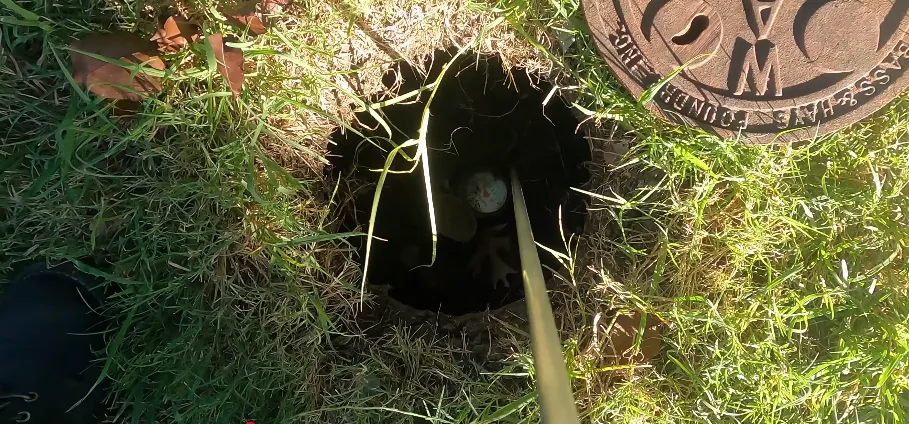
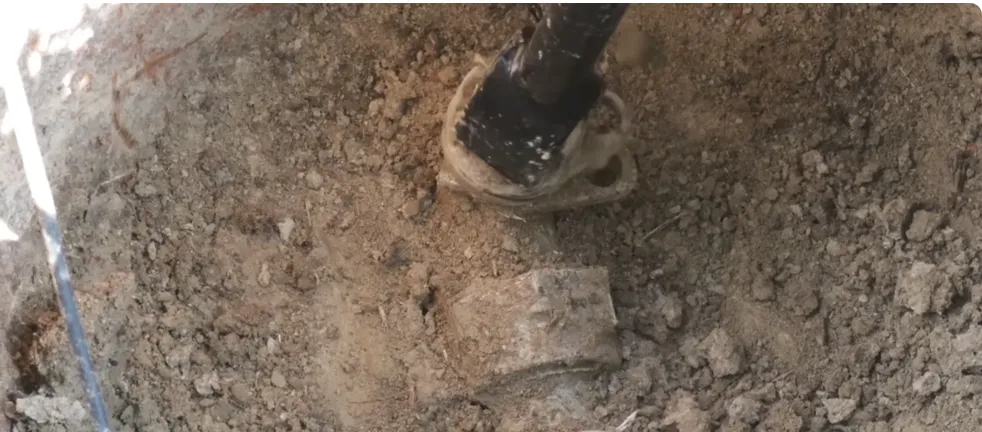
On most Plant City streets, the meter sits in a rectangular box set in the ground near the curb, the sidewalk or the edge of the driveway. The lid lifts off or has a small latch. Use a screwdriver or a meter key to lift it rather than your fingers: Florida meter boxes are a favorite spot for fire ants, wasps, spiders, toads and sometimes snakes. Wait a moment, look, then clear away any dirt or water so you can read the dial.
Some newer meters have a protective cover that flips up over the dial, and some read electronically, showing numbers on a small digital screen that may need sunlight or a flashlight to wake up.
How to Read the Leak Indicator
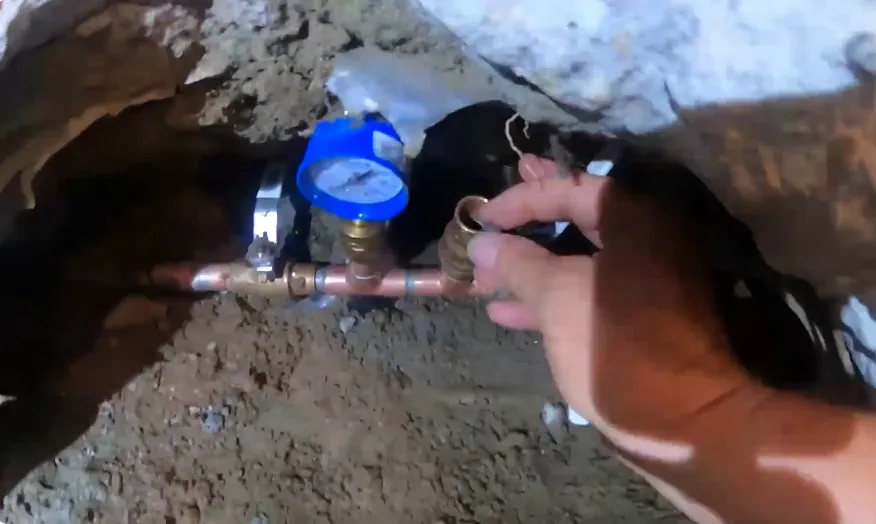
Mechanical meters have a large sweep hand and a row of numbers, plus a small low-flow indicator, often a red or blue triangle, star or tiny gear. That indicator spins with even a trickle of flow, so it's the part to watch.
Digital meters usually show a flow rate or a faucet or leak symbol that appears when water is moving. If yours shows a flow number, anything above zero with everything off means water is going somewhere.
Note the units on the meter face. Many meters read in gallons, while some read in cubic feet; one cubic foot is about 7.48 gallons. That matters if you compare readings to your bill.
The 15-Minute Meter Test, Step by Step
- Stop all water use. Turn off faucets and showers, and make sure the dishwasher, washing machine and ice maker aren't running. Switch the irrigation controller to off, and close the pool or fountain autofill valve.
- Write down or photograph the reading, including the position of the sweep hand.
- Watch the leak indicator for at least 10 to 15 minutes without anyone using water.
- Check the reading again. Any movement means a leak somewhere downstream of the meter.
For very slow leaks, do a longer test. Take a reading before bed, use no water overnight, and read it again in the morning. Even a small change over several hours is worth investigating.
Tip: A water softener or reverse osmosis system can use water during its cycle. If you have one, put it in bypass or run the test outside its regeneration time.
Narrow It Down: House or Yard?
Once you know there's a leak, the next step is splitting the system in two.
Close the house shut-off valve (see our main water shut-off guide) and watch the meter again.
- Meter still moving: the leak is between the meter and the house, on the underground service line or a branch that tees off before the house valve, such as irrigation or a line to a pool or shed. That's the territory of water line leak detection.
- Meter stops: the leak is inside the house, in a fixture, appliance, water heater, wall, or the pipes under the slab.
If the leak is inside, check toilets first with a dye test: a few drops of food coloring in the tank that show up in the bowl within 15 minutes without flushing mean the flapper is leaking. Then look under sinks, behind the washer and around the water heater. If everything looks dry and the meter still moved, the leak may be hidden in a wall or under the slab. Warm spots on the floor point toward a hot-water slab leak.
Don't Forget Irrigation and Pools
Plant City yards rely heavily on sprinklers through the dry months, and many homes have pools with automatic fill valves. Both are common hidden water users. Some properties have a separate irrigation meter; if yours does, test it the same way with the controller off. A pool autofill that runs constantly can mask a pool leak, so close it before the test and check the pool level separately with a bucket test. See irrigation leak detection for what to do if the sprinkler side is the problem.
Testing a Home on a Private Well
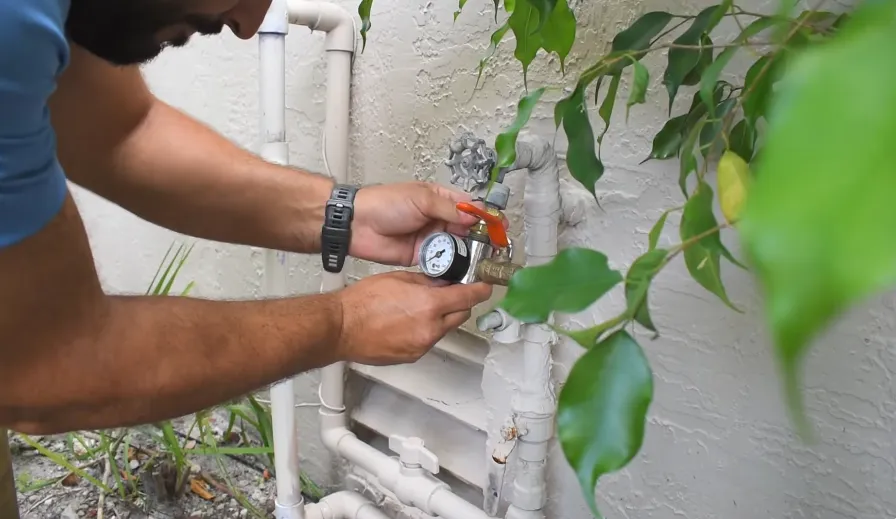
Well systems have no utility meter, so the pressure tank gauge does the same job. With all water off, note the pressure, turn off the well pump breaker, and check again after an hour or two. A pressure drop with nothing running means water is leaving the system. A pump that kicks on by itself at night, with no one using water, is another strong sign of a leak.
When the Meter Says Leak but You Can't Find It
The meter tells you that water is escaping; it doesn't tell you exactly where. Once you've checked the obvious places, the most efficient next step is professional detection. A provider can pressure test sections of plumbing, listen to buried and under-slab lines with acoustic equipment, scan for moisture with thermal imaging, and confirm the exact spot before anything is opened up. Bring your meter readings when you call; they help the provider understand how fast the leak is running.
Frequently Asked Questions
How long should I watch the water meter to check for a leak?
Watch the leak indicator for at least 10 to 15 minutes with all water off. For slow leaks, compare readings over two hours or overnight.
My meter moves only a tiny bit. Is that still a leak?
Yes, if nothing is running. Small leaks like a toilet flapper or a pinhole can move the indicator slowly but add up over a billing cycle.
The meter stops when I close the house valve. What does that mean?
The leak is inside the house. Check toilets, faucets, the water heater and appliances, then consider hidden pipes in walls or under the slab.
Can a leak be on the city side of the meter?
Water escaping before the meter isn't recorded by your meter. If you see water pooling near the meter box or street with the meter still, contact your water utility.
What should I tell the provider when I call?
Your meter test results, whether the meter stops with the house valve closed, and any signs like warm floors, damp spots or a higher bill.